

In a world where concrete jungles dominate the landscape, the idea of cultivating a green oasis might seem like a pipe dream. But fear not! Urban gardening is the perfect antidote to city life’s hustle and bustle. With a little creativity and a dash of elbow grease, anyone can transform their balcony, rooftop, or even a windowsill into a flourishing garden that would make Mother Nature proud.
Understanding Urban Gardening
Urban gardening creates green spaces in densely populated areas. This practice transforms balconies, rooftops, and windowsills into productive environments, allowing individuals to connect with nature.
What Is Urban Gardening?
Urban gardening involves cultivating plants in cities. It encompasses various forms, such as container gardening, vertical gardening, and community gardens. This approach adapts to limited space and resources found in metropolitan areas. Innovative solutions facilitate growing vegetables, herbs, and flowers in smaller environments. With proper techniques, urban gardens flourish and provide fresh produce.
Benefits of Urban Gardening
Urban gardening offers numerous advantages. Improved air quality results from increased greenery, which filters pollutants and absorbs carbon dioxide. Creating green spaces enhances mental well-being, providing relaxation and joy. Access to fresh produce helps promote healthier diets, reducing reliance on store-bought options. Social connections strengthen as individuals engage in community gardening initiatives. Overall, urban gardening fosters environmental sustainability and livable cities.
Essential Urban Gardening Tips
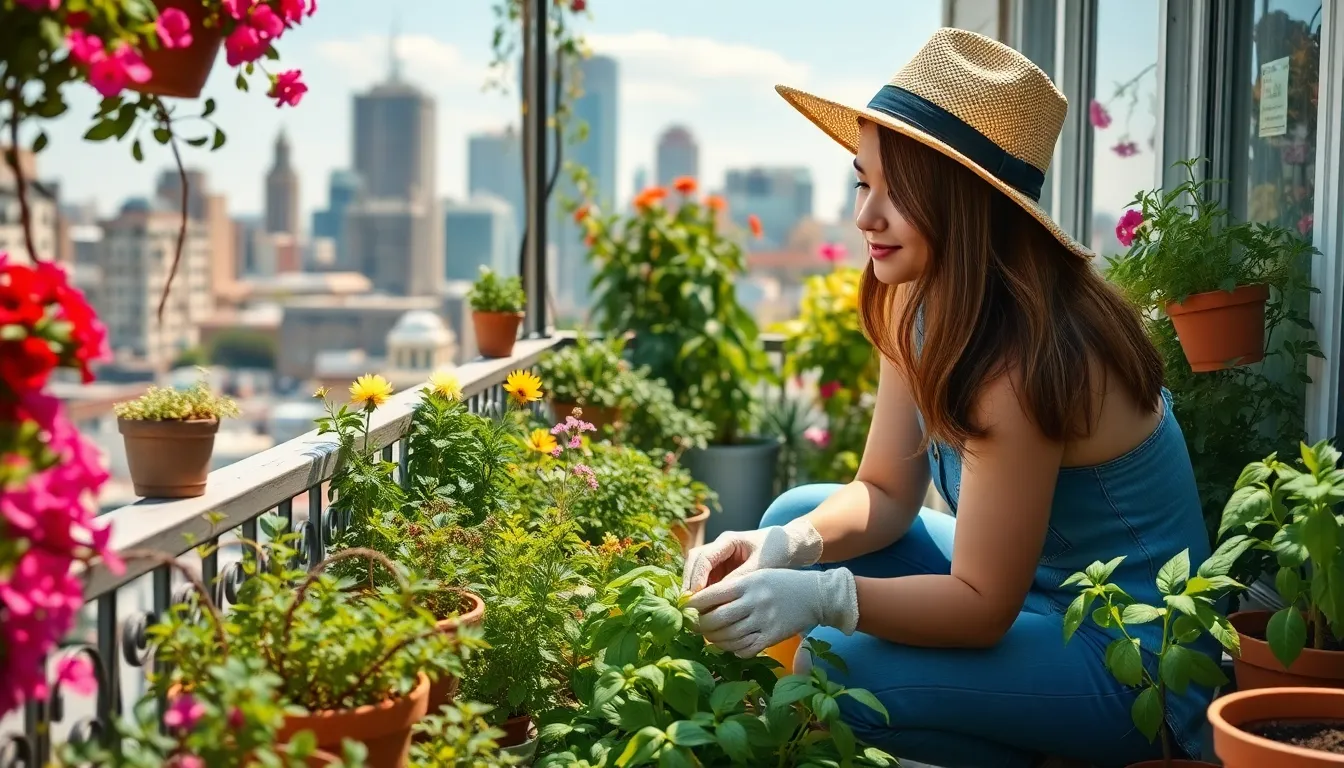
Urban gardening thrives on thoughtful planning and care. Here are key tips to maximize success.
Choosing the Right Location
Identify spaces that receive adequate sunlight. Balconies and rooftops often provide optimum exposure for plants. Sheltered corners may protect from harsh winds. Consider proximity to water sources for easy irrigation. Ensure access to electrical outlets if grow lights are necessary. Avoid areas with too much shade or extreme temperatures, as these can hinder plant growth. Test different locations to find what works best for specific plants.
Selecting Suitable Plants
Choose plants that adapt well to urban environments. Herbs, such as basil and mint, grow well in containers and require minimal space. Vegetables like lettuce and radishes thrive in shallow soil. Flowering plants, including petunias and marigolds, enhance aesthetics and support pollinators. Opt for native species to reduce maintenance and increase resilience. Consider growing vertical plants to maximize space efficiently. Research climate conditions and adjust selections accordingly to ensure successful growth.
Gardening Techniques for Urban Spaces
Urban gardening thrives on creativity and adaptability. Utilizing available space effectively enhances the gardening experience even in crowded environments.
Vertical Gardening Solutions
Utilizing vertical gardening maximizes limited urban space. Installing wall planters or trellises creates living walls, allowing plants to grow upwards. Common options for vertical gardens include climbing plants, such as peas or beans, and decorative flowers. Ensuring adequate sunlight and proper watering is crucial for success in vertical setups. Shop for pre-made vertical garden kits or make DIY versions with pallets or recycled materials. This approach not only beautifies the area but also optimizes air quality while attracting beneficial insects.
Container Gardening Ideas
Container gardening provides flexibility and ease for urban dwellers. Selecting containers made from various materials, like terra cotta, plastic, or wood accommodates different styles and preferences. Choosing the right plants is essential; popular options include basil, tomatoes, and succulents, which thrive in limited space. Arranging containers to take advantage of sunlight ensures healthy growth. Using self-watering pots simplifies maintenance and conserves water. Grouping containers together can create a small garden oasis, elevating the urban environment while promoting sustainability.
Sustainable Practices in Urban Gardening
Urban gardening thrives on sustainable practices that support both plant growth and environmental health. Composting and water conservation play crucial roles in fostering these practices.
Composting in Small Spaces
Composting can take place even in limited areas. Using countertop bins or worm composters allows for effective organic waste management. Many urban gardeners utilize kitchen scraps like vegetable peels and coffee grounds to create nutrient-rich compost. Small outdoor spaces can accommodate compost tumblers or bins that streamline the process. Regularly turning the compost accelerates decomposition. This practice enriches garden soil with essential nutrients, promoting healthier plants.
Water Conservation Techniques
Water conservation techniques enhance sustainability in urban gardening. Collecting rainwater with barrels captures natural resources for irrigation. Drip irrigation systems distribute water efficiently to minimize waste. Mulching around plants helps retain moisture in the soil, reducing the need for frequent watering. Consider using drought-resistant plants adapted to dry conditions. Implementing these techniques not only conserves water but also supports vibrant urban gardens.
Urban gardening offers city dwellers a unique opportunity to connect with nature while enhancing their living spaces. By embracing innovative techniques and sustainable practices, individuals can transform even the smallest areas into vibrant green sanctuaries.
The benefits extend beyond aesthetics; urban gardening promotes environmental health and fosters community ties. With the right approach and a bit of creativity, anyone can cultivate a flourishing garden that not only beautifies their surroundings but also contributes to a healthier urban ecosystem.
As more people adopt urban gardening, cities can become greener and more sustainable places to live.