
Corned beef, a beloved dish especially during festive occasions, requires precise cooking to achieve that perfect tenderness and flavor. Understanding the internal temperature is crucial for both safety and taste. Cooking corned beef to the right temperature ensures it’s not only safe to eat but also melts in your mouth.
Many home cooks might wonder what the ideal internal temperature is and how to achieve it. With the right knowledge, anyone can master the art of cooking corned beef. This guide will explore the optimal temperatures, cooking methods, and tips to ensure every bite is juicy and flavorful. Whether it’s for a traditional St. Patrick’s Day feast or a comforting family dinner, knowing the perfect internal temp is key to impressing guests and satisfying taste buds.
Understanding Corned Beef
Corned beef originates from brisket, a tough cut of meat that requires careful preparation. The term “corned” refers to the curing process, where beef is preserved using large grains of salt, historically known as “corns” of salt. The curing method not only adds flavor but also helps tenderize the meat.
When selecting corned beef, look for cuts with even marbling. The marbling helps maintain moisture during cooking, resulting in a tender final product. Certified Angus Beef® or USDA Choice grades often provide optimal results due to their quality.
Cooking corned beef requires attention to internal temperature. An ideal cooking temperature is 190°F to 205°F, ensuring the collagen breaks down and the meat becomes tender. Use a meat thermometer for accuracy, inserting it into the thickest part of the brisket.
Corned beef is versatile and can be prepared using various cooking methods, including boiling, braising, or slow cooking. Each method impacts the flavor and texture of the meat. Boiling results in a moist, tender outcome, while slow cooking enhances the flavors further.
Pair corned beef with classic accompaniments like cabbage, carrots, and potatoes for a traditional meal, especially during festive occasions. Understanding these aspects helps create a memorable corned beef dish that stands out for its flavor and tenderness.
Importance of Internal Temperature
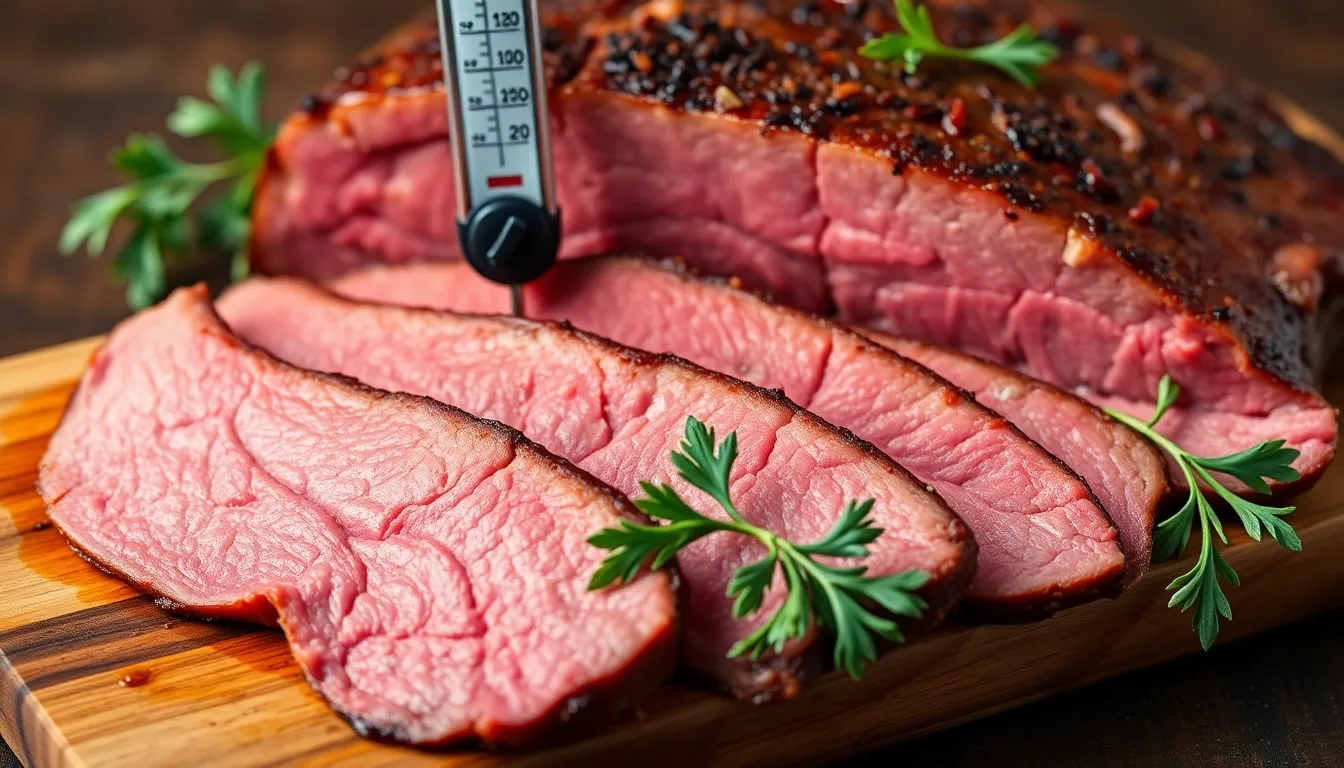
Ensuring the correct internal temperature of corned beef is crucial for food safety and achieving optimal flavor and tenderness. Understanding the specifics of temperature can elevate the cooking process significantly.
Food Safety Considerations
Cooking corned beef to a minimum internal temperature of 145°F guarantees that harmful bacteria are eliminated. It’s essential to allow a rest period of three minutes after cooking, as this helps maintain safety. For maximum safety and tenderness, reaching an internal temperature of 190°F to 205°F is recommended. At this range, collagen breaks down, enhancing the meat’s tenderness. Using a food thermometer ensures accuracy, reducing the risk of foodborne illnesses.
Desired Textural Qualities
Achieving the ideal internal temperature significantly impacts the textural qualities of corned beef. An internal temperature of 190°F yields fork-tender meat, perfect for slicing or shredding. Higher temperatures enhance moisture retention, allowing for a juicier bite. A lower temperature may leave the meat chewy and less enjoyable. Cooking methods like slow cooking or braising promote even heat distribution, leading to optimal textural results.
Recommended Internal Temp of Corned Beef
Cooking corned beef to the recommended internal temperature ensures safety and tenderness. The ideal range lies between 190°F to 205°F for optimal results.
Cooking Methods and Their Impact
Cooking methods significantly affect the flavor and texture of corned beef.
- Boiling: Cooking in water enhances moisture retention and results in a tender outcome.
- Braising: This method combines liquid and low heat, infusing flavors while keeping the meat juicy.
- Slow Cooking: Using a slow cooker facilitates even heat distribution, allowing collagen breakdown for a fork-tender texture.
Each method contributes uniquely, emphasizing the importance of choosing the right technique for desired results.
Measuring the Temperature Accurately
Accurate temperature measurement is vital for ensuring safe consumption.
- Food Thermometer: Utilizing a reliable food thermometer guarantees precise readings.
- Insert Location: Place the thermometer in the thickest part of the meat, avoiding fat or bone for accurate results.
- Temperature Check: Monitor the internal temperature during cooking, with a focus on reaching at least 145°F for safety.
Following these steps ensures corned beef not only meets safety standards but also achieves ideal tenderness and flavor.
Tips for Perfectly Cooked Corned Beef
Achieving perfectly cooked corned beef requires attention to detail in both cooking methods and finishing touches. Here are essential tips for elevating corned beef to its optimal state.
Resting Time After Cooking
Resting corned beef for at least 15-30 minutes after cooking is crucial. This step allows juices to redistribute, resulting in a moister final product. If sliced immediately, the juices tend to escape, leading to drier meat. While resting, cover the meat loosely with foil to keep it warm, which helps maintain tenderness and enhances flavor absorption.
Seasoning and Flavor Enhancements
Seasoning corned beef enhances its natural flavors significantly. Adding spices like black peppercorns, mustard seeds, and bay leaves during cooking infuses the meat with depth. For additional flavor enhancements, consider:
- Marinades: A mixture of vinegar, mustard, and brown sugar can serve as a marinade before cooking. This combination adds a tangy sweetness that complements the salty profile of the corned beef.
- Herbs: Fresh herbs like thyme or rosemary can be added during the last hour of cooking to provide aromatic freshness.
- Glazes: A glaze made from honey, mustard, and brown sugar can be brushed onto the meat during the final cooking phase, creating a flavorful crust.
Implementing these tips enhances the taste of corned beef, ensuring a delectable dish for any occasion.
Mastering the internal temperature of corned beef is key to achieving a delicious and safe dish. With the right temperature range of 190°F to 205°F, cooks can ensure the meat is tender and flavorful. Utilizing methods like slow cooking or braising not only enhances the taste but also guarantees moisture retention.
Pairing corned beef with traditional sides can elevate any meal, making it a standout choice for celebrations or family gatherings. By following these guidelines and using a reliable food thermometer, anyone can create a memorable corned beef dish that will impress family and friends alike.