
In a world drowning in waste, recycling isn’t just a trendy buzzword—it’s a superhero in disguise. Imagine turning your old soda cans into stylish planters or transforming worn-out t-shirts into chic tote bags. These creative recycling ideas not only help the planet but also add a dash of personality to everyday life.
Creative Recycling Ideas for Home
Recycling at home offers numerous opportunities for creativity. Individuals can transform unwanted items into functional and stylish pieces.
Upcycling Household Items
Upcycling household items can take many forms. Old glass jars serve as decorative storage containers for small items like spices or craft supplies. Using worn-out jeans, one can create unique cushion covers or stylish tote bags. Plastic containers find new life as organizers for drawers or gardening planters. Wooden pallets can become trendy coffee tables or garden benches. Each project not only minimizes waste but also adds character to home decor.
Repurposing Furniture
Repurposing furniture transforms old pieces into something new. An outdated dresser turns into a chic bathroom vanity, with a fresh coat of paint and a new sink. Wooden chairs can be turned into eye-catching garden swings or storage solutions. Using an old table, individuals can create a bench or a unique desk by modifying the legs and adding cushions. Every repurposed piece tells a story while providing practical use, showcasing the potential of once-loved furniture.
Recycling Ideas for Kids

Encouraging kids to recycle sparks creativity and teaches environmental responsibility. Engaging activities can make recycling fun and educational.
Fun Crafts Using Recyclables
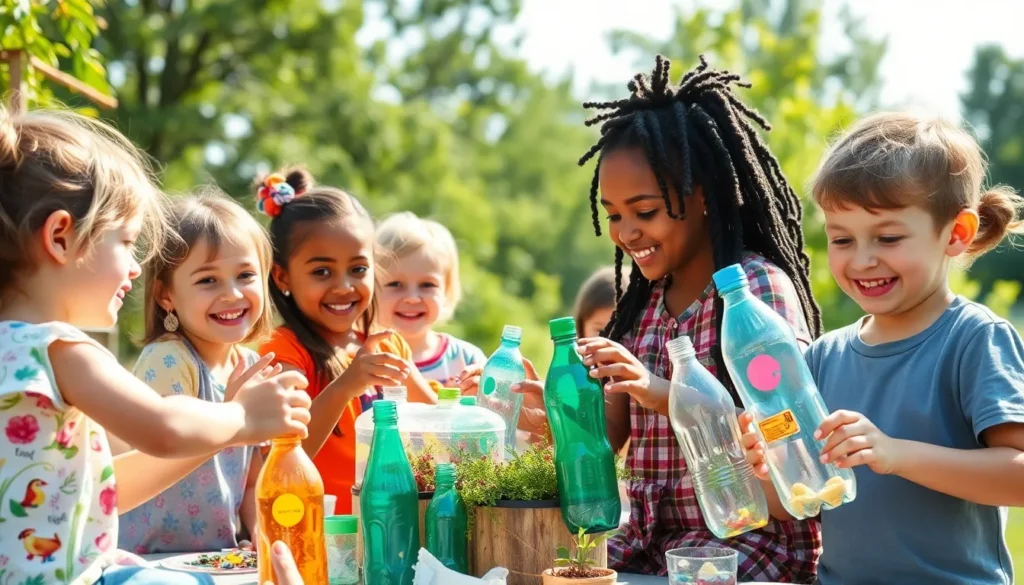
Creating crafts from recyclable materials promotes resourcefulness. Kids can make bird feeders from old milk jugs or transform toilet paper rolls into binoculars. Using plastic bottles, they can design planters for small plants. Decorating egg cartons into caterpillar shapes offers a fun art project. Repurposing newspapers helps kids create colorful paper mache sculptures. Each craft project enhances creativity while teaching the value of reuse.
Educational Projects
Educational projects using recyclables can deepen understanding of sustainability. Kids can build models of ecosystems using cardboard and plastic containers. Learning about wind energy becomes interactive when constructing wind turbines from old DVDs and straws. Conducting experiments with reused glass jars to observe plant growth fosters curiosity. Organizing a classroom recycling drive encourages teamwork and responsibility. Each project offers hands-on learning about the environment and promotes recycling habits.
Eco-Friendly Recycling Ideas for Businesses
Businesses can implement creative recycling strategies that enhance sustainability, cut costs, and engage employees. The focus on environmentally friendly practices can significantly reduce waste.
Sustainable Practices
Reducing paper usage plays a critical role in sustainable business operations. Digital documents minimize printing needs while streamlining processes. Additionally, using recycled materials for packaging lowers the environmental footprint. Companies can also invest in recycling bins placed prominently around the workplace, encouraging employees to recycle specific materials like plastic and glass. Organizing a recycling day fosters team collaboration and raises awareness about proper disposal methods. Sustainable practices not only contribute to environmental conservation but also position businesses as responsible corporate citizens.
Community Involvement
Community involvement strengthens business ties and promotes recycling awareness. Partnering with local organizations for clean-up events encourages employees to connect with the community through service. Workshops on recycling and upcycling educate both employees and community members about innovative practices. Supporting local schools in recycling programs fosters youth engagement in sustainability. Sponsoring recycling competitions builds enthusiasm and awareness among families, further promoting eco-friendly habits. These initiatives demonstrate corporate responsibility while positively impacting the environment and community well-being.
Innovative Recycling Techniques
Innovative recycling strategies leverage technology and creativity to promote sustainability. Numerous techniques allow for increased efficiency and effectiveness in waste management.
Advanced Recycling Technologies
Advanced technologies significantly enhance recycling processes. For instance, chemical recycling breaks down plastics into their original monomers, allowing for their reuse in new products. Artificial intelligence optimizes sorting procedures at recycling facilities, leading to higher recovery rates of valuable materials. Companies are also investing in bio-based materials that naturally decompose, reducing long-term waste impact. Integrating these technologies streamlines operations while encouraging innovations that lead to new recycling methods.
Global Success Stories
Successful recycling initiatives around the globe demonstrate effective solutions for waste reduction. Germany’s dual system, which incentivizes recycling through financial rewards, has seen over 67% of waste recycled. In Sweden, a remarkable 99% of waste is either recycled or converted into renewable energy. Communities like Kamikatsu, Japan, take recycling to the next level with 45 categories for sorting waste. These models prove that collaborative efforts, strong policies, and public engagement can achieve impressive recycling outcomes while fostering a sustainable future.
Embracing recycling ideas can significantly impact both personal lifestyles and the broader community. By repurposing materials creatively individuals can reduce waste while enhancing their surroundings. Kids can learn valuable lessons about sustainability through fun and engaging projects that spark their creativity.
Businesses also play a crucial role in promoting eco-friendly practices by implementing innovative recycling strategies that not only cut costs but also engage employees. As communities come together to support recycling initiatives the potential for positive environmental change grows.
With technology paving the way for advanced recycling methods the future looks promising. By adopting these practices everyone can contribute to a more sustainable world, making a difference one recycled item at a time.